
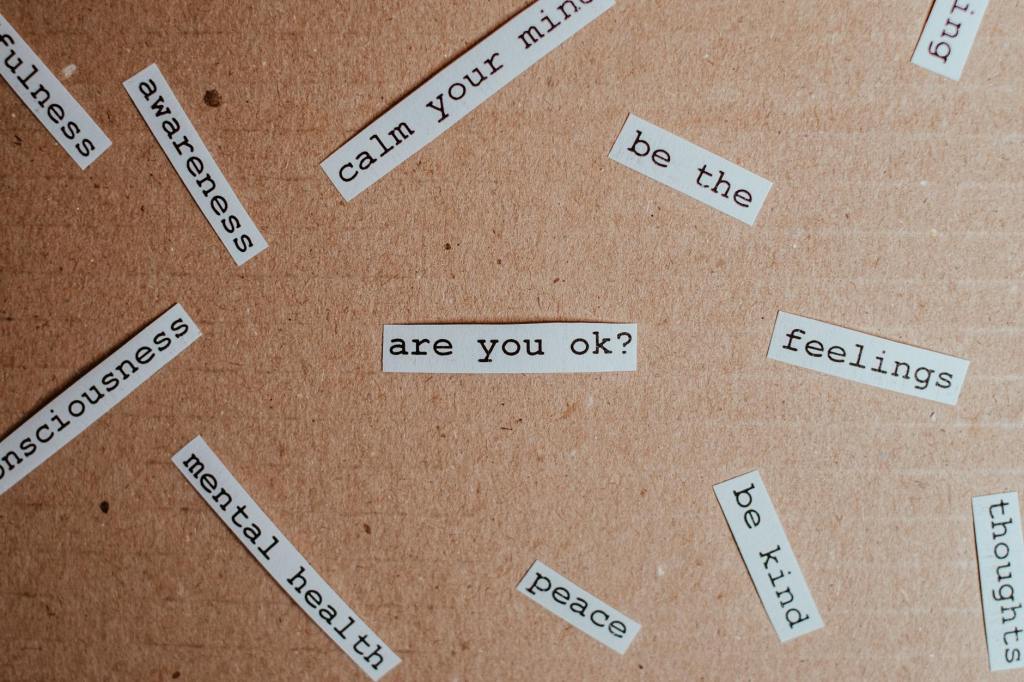
What does it mean to feel everything? Whether you’re an HSP or trying to understand one, this post offers a glimpse into what it’s like to live deeply in a world that rarely slows down.
Finding language for the way I feel the world
Labels can feel limiting — like boxes trying to contain things that are messy, layered, and constantly shifting. I don’t want to be reduced to a category, or feel like I need to explain myself in acronyms. But the truth is, realising I’m a highly sensitive person (HSP) changed something for me.
I didn’t stumble across the term in any official or clinical way. I wasn’t out hunting for another label. I was just trying to understand why I seemed to carry the world so heavily on my skin.
- Why things like injustice — even in small, everyday forms — cut straight through me.
- Why sudden, loud sounds jolt me into panic.
- Why bright, overhead lights are so jarring.
- Why I feel like I could shut down if there are too many people talking at once.
I’ve left meetings and conversations feeling physically unwell many times. Not because of what was said, but everything else.
The tone, the tension, the truth under the surface no one named.
And then I read an article written by a highly sensitive person — and had a eureka moment. Everything made sense.
What is a highly sensitive person (HSP)?
A highly sensitive person is someone who has a personality trait known as sensory processing sensitivity.
This doesn’t mean we’re fragile or overly emotional. It means our brains and nervous systems are wired to process information more deeply and thoroughly.
About 15–20% of the population are believed to be HSPs.
Common highly sensitive person traits include:
- Feeling emotions deeply — both joy and pain tend to register with intensity.
- Being more affected by environmental factors, like noise, crowds, or bright lights.
- Strong empathy, emotional awareness and ability to pick up on subtle cues others miss.
- Needing regular downtime to recharge after intense social, emotional, or sensory input.
This trait is backed by research. Brain scans show increased activity in areas responsible for awareness. They also show increased activity in regions responsible for empathy and emotional regulation.
How I knew I was highly sensitive
I think the first time I really noticed it was when I was about six. I felt this sense of being out of step.
We’d just moved from Holland to London. I was used to the joy of Dutch birthday traditions. Making paper hats in class, celebrating together.
When I brought that into my new classroom, the kids just stared. Blank faces. Bored expressions.
They just didn’t get it.
I remember standing there, excited and proud and then suddenly… humiliated.
I could feel how much they didn’t understand, and it hurt. Not just the moment itself — the energy in the room.
It was like I could feel the temperature drop. That’s the kind of thing I’ve always felt: atmospheres, undercurrents, words left unspoken.
I’ve always been drawn to people who didn’t quite fit in. The kid in the playground everyone avoided. The ones who were “too quiet” or “too odd” or “too loud”. I saw myself in them, even before I had language for why.
Living as a highly sensitive person: The intensity of everything
Being a highly sensitive person doesn’t mean I’m fragile. It means I notice things — deeply, and often all at once.
Sudden loud noises can startle me.
A slammed door or a jarring shift in lighting can knock me off balance.
Take the London Underground: the screech of brakes, the heat, the press of bodies, the coughs echoing down the carriage. It’s not just inconvenient — it can be physically overwhelming. Sometimes I have to work hard to stay present.
And yet… I love going out.
I thrive on dancing, music, the electric charge of a room full of energy.
But for me, joy comes from feeling fully immersed — not just attending, but absorbing.
I don’t just hear the music. I feel it. It moves through me. That’s when I feel most alive.
What’s difficult is when that rhythm breaks — when there’s too much chatter, too many interruptions, too much unexpected noise. That’s when my nervous system can go into overdrive.
When it does, I’ve learnt to take space. To reset. It’s not about avoiding life — it’s about learning how to stay steady within it.

HSPs and relationships: When feeling too much feels like a problem
I experience relationships with a lot of emotional depth. When I misstep, I feel it fully — sometimes more than necessary.
It’s not about drama, but about how seriously I take connection and care.
When I care for someone, I care in this huge, consuming way. It’s tidal. Sometimes it’s too much — even for me.
There are times I’ll want nothing more than to touch and be touched. But then I freeze. It’s like my nervous system short-circuits from how intense the feeling is.
I need space — even from the people I adore.
Work has been hard too. There’s so much expectation to be “on” — to perform, contribute, and come up with ideas on demand. But if I’m already overstimulated, I go blank. And then the shame spiral kicks in: I feel incompetent and stupid, like I don’t belong.
It’s not true, but it feels true.
And that’s the thing — for HSPs, feelings aren’t small or passing. They’re truths in the moment.
What helps me heal as a highly sensitive person
I still don’t like boxes. I don’t want to be put in one. But knowing about HSPs gave me a way out of the mental cage I’d put myself. The one that said I was too emotional, too reactive, too sensitive for this world.
Now I know:
- I need quiet time, not because I’m antisocial, but because I’m recharging.
- I’m not overreacting — I’m fully reacting to things others might not even notice.
- I’m not weak — I’m attuned.
- I’m not alone — there are others like me, feeling everything just as deeply.
What I wish people knew about HSPs
If I could share anything about living as a highly sensitive person, it’s this:
- We’re not dramatic — we’re wired for depth.
- We’re not cold when we go quiet — we’re overwhelmed.
- We’re not distant — we’re full. So full we don’t know where to put it all sometimes.
- We thrive in the right conditions — with gentleness, understanding, and space.
You’re not alone
If any of this sounds like you or someone you care about, I hope it offered a bit of clarity, comfort, or recognition.
Whether you’re just discovering what it means to be a highly sensitive person, or trying to understand someone who feels everything a little more deeply, you’re welcome here.
This is just the beginning of me making sense of it all — out loud, on the page.
If you want to follow along as I unpack life through this sensitive lens, I’d love to have you with me.
Stick around for the ramblings. There’ll be plenty.
— Jas
Let me know your thoughts in the comments below! I’d love to hear from you.
 still too sensitive