Category: Blog Post

  • Is sensitivity misunderstood? Exploring its complexities

    Is sensitivity misunderstood? Exploring its complexities

    Being highly sensitive often means feeling things deeply — but when ADHD or other traits overlap, the lines can blur. This post explores why learning to name what’s really happening can be a powerful act of self-understanding.

    When sensitivity isn’t the whole story

    I’m highly sensitive, but that doesn’t mean I catch it all.

    With ADHD — predominantly inattentive — I sometimes miss what’s right in front of me. Other times, I hear everything, all at once. Or I’ll lock onto one small thing and the rest will vanish.

    There’s no rhythm to it. It’s just a kind of beautiful chaos. Clarity and overwhelm take turns leading the way.

    I either hear everything, or I zero in on one thing and block the rest out.

    Sometimes I can lose myself in a chaotic environment. It almost feels good — like my brain is matching the noise.

    Other times, one loud noise completely derails me. I can’t focus on anything but that one sound, and it feels like my whole system short-circuits.

    It’s confusing. And it’s not always clear what’s sensitivity, and what’s something else.

    Questioning everything
    Self-awareness, for me, often looks like asking the same questions on repeat:

    • Is this sensitivity, or is it overstimulation?
    • Is this anxiety, or am I just out of capacity?
    • Is this focus, or am I in a hyperfixation loop?
    • Am I burnt out — or just completely depleted?

    These aren’t necessarily thought spirals. They’re attempts to understand my own system better — so I can support it more effectively.

    Trusting your own judgement is so important here.

    When you’re often labelled “too sensitive,” it’s easy to internalise the idea. You might think your reactions aren’t valid until someone else validates them.

    I’ve learned that just because my experience is different, doesn’t make it wrong. It just makes it mine.

    What else could it be?
    It’s easy to land on the label “sensitive” when you feel things deeply. And yes, maybe you are sensitive. But sometimes, there’s more going on.

    • ADHD can feel like sensitivity, but it’s often emotional dysregulation and inconsistent attention.
    • Anxiety can feel like sensitivity, but it’s driven by fear and hyperawareness.
    • Depression can seem like disinterest, but it’s often the exhaustion that comes from carrying heavy emotions.
    • Trauma can look like sensitivity too — a nervous system on high alert, reacting to danger that’s long gone.
    • Let’s not forget burnout — it can make even a gentle life feel too loud, too bright, too much.

    Not everything intense is sensitivity. Sometimes it’s something else. Or a combination of things.

    Why it matters
    It matters, because naming what’s really happening can help you understand what you need.

    • Sensitivity might call for softer environments and emotional space.
    • ADHD might need stimulation and movement.
    • Anxiety may ask for reassurance and grounding.
    • Depression may ask for patience, presence, and gentle understanding.
    • Trauma needs safety.
    • Burnout needs rest.

    If you treat everything like it’s just sensitivity, you risk missing what your body is actually asking for.

    But you don’t have to pick one. Being a highly sensitive person doesn’t cancel anything else out.

    You can be sensitive and whatever else — and still be completely valid.

    It’s through awareness and understanding that we can start living in alignment with our true selves.

    Owning your needs, wiring, and patterns brings relief — and a kind of quiet strength.

    The more you understand yourself, the better you can navigate the world in a way that works for you.

    I’m learning that I don’t need to reshape myself to be worthy of respect, belonging, or space. And neither do you.

    Jas

    still too sensitive

    Let me know your thoughts in the comments below 💙️
    I’d honestly love to hear from you!
  • The hidden strengths of being a highly sensitive person

    The hidden strengths of being a highly sensitive person

    Being highly sensitive can feel like a burden — but it’s also a quiet superpower. This post explores how sensitivity isn’t weakness — it’s depth. And it might just be your greatest strength.

    When I first learned about the term “highly sensitive person,” it felt like someone switched on a light in a room I didn’t know I’d been sitting in.

    Suddenly, so many parts of my experience made sense.

    • The way I notice shifts in a friend’s tone before they even speak a word.
    • How I absorb the energy in a room instantly.
    • How I’ve always needed more downtime than others to recover from what seems like nothing to them.

    For a long time, I saw these traits as weaknesses. But being an HSP comes with strengths that are often undervalued in our overstimulated, fast-paced world.

    Deep empathy

    HSPs bring emotional attunement and compassion into relationships.

    One of the most powerful aspects of being an HSP is our empathy. I don’t just understand when someone’s upset — I feel it. This can be overwhelming, sure, but it also means people feel genuinely safe around me.

    I’ve often been the one friends turn to in moments of crisis. Not just because I listen, but because I can meet them where they’re at emotionally without them needing to explain.

    A rich inner world

    Emotional depth, imagination, and introspection shape the inner life of an HSP.

    My imagination has always been vivid. Even as a child, I could spend hours daydreaming, drawing, or creating entire worlds in my head.

    As an adult, that deep inner world fuels my creativity. With writing for example, because I feel things deeply, I can write about them with nuance and authenticity.

    I’ve learned that this emotional depth isn’t a burden — it’s actually a well I can draw from.

    Intuition as a superpower

    Deep inner knowing and sensitivity guide highly sensitive people.

    Intuition is something we all have, but sensitive people tend to feel it louder. Picking up on the things others miss isn’t a flaw — it’s a strength.

    The hard part is trusting it, especially when the world teaches us to doubt ourselves.

    When you’re deeply sensitive and naturally understanding, it’s easy for others to take advantage. It’s taken me years of listening, reading, and quietly observing to sharpen and trust my instincts.

    Creativity and insight

    HSPs often channel their emotional depth and unique perception into meaningful creative work.

    Being highly sensitive often means noticing patterns, beauty, and details that others overlook. I’ve channeled this into my content and marketing work, as well as through my volunteer experience.

    I see the magic in people’s stories, and I have a strong desire to express that in ways that move others.

    Whether it’s through writing or curation, this sensitivity adds depth and originality to what I do.

    Meaningful connections

    Many HSPs naturally seek honest, emotionally rich dialogue.

    I don’t do small talk well — never have, never will. But give me a real conversation about someone’s fears, passions, or values, and I come alive.

    Because I process everything so deeply, I crave relationships that are honest and emotionally available.

    This can sometimes make dating or friendships feel more difficult, especially in a world that often encourages surface-level engagement.

    But when I find people who match that depth, the connection can be cosmic.

    Sensory appreciation

    HSPs experience the world in vivid, emotionally resonant detail.

    It’s true — I can feel overwhelmed by sudden loud noises or unfamiliar chaotic environments. But on the flip side, I’m often deeply moved by a beautiful song. Or the way the sunlight flickers through the trees.

    These little moments feel sacred, and help ground me when everything else feels like too much.

    Integrity and conscientiousness

    High sensitivity can drive you to live with care, integrity, and compassion.

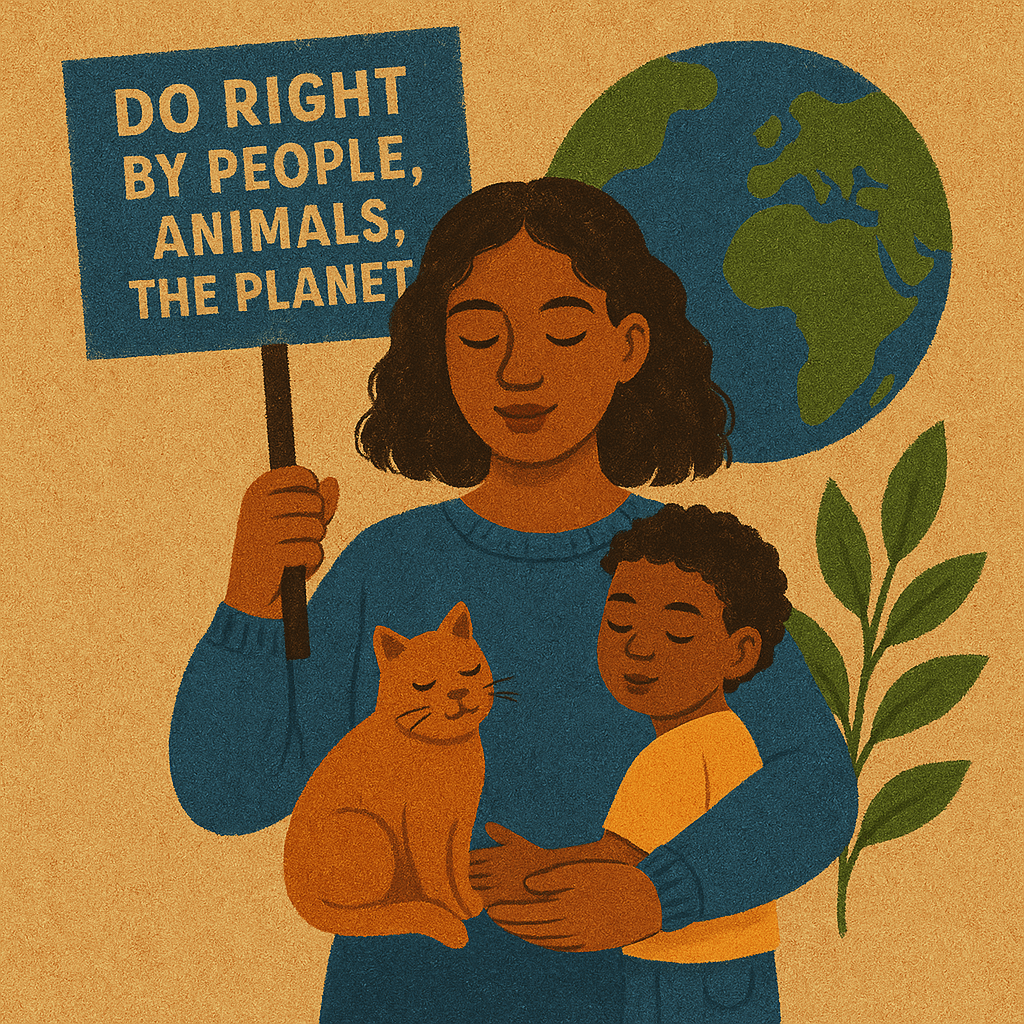
    I’ve always held myself to a high standard, sometimes to a fault. But the upside is that I care deeply about doing right by people, animals, and the planet.

    I’m thorough, I try my best to reflect before I act, and I take responsibility and accountability seriously. This has led many of my life decisions, from what I eat to my career choices.

    I’m thoughtful and open to experiencing different perspectives, which can be a great strength, especially in emotionally nuanced situations.

    Growth-oriented living

    Gentle self-reflection and lifelong emotional growth are common in highly sensitive people.

    Being highly sensitive means I’m always reflecting (sometimes overthinking!), but it also means I’ve been on a lifelong path of self-awareness.

    The challenges I’ve faced have pushed me to develop a strong emotional toolkit.

    I now know that my sensitivity isn’t just something I have to “manage” — it’s something I can honour. I’m excited for where this journey of acceptance and discovery will take me.

    If you’re an HSP reading this, I hope you know there’s nothing wrong with the way you experience the world. In fact, there’s a whole lot that’s right.

    In a world that values speed and detachment, sensitivity is a quiet power. It brings beauty, depth, and healing into every space it touches.

    You’re not too sensitive. You’re still sensitive — and that’s your strength.

    So here’s to the ones who feel deeply, care quietly, and notice the things others miss. The world needs your sensitivity more than it knows.

    Thank you for being here, and for being exactly who you are.

    Jas

    still too sensitive

    Scroll down to like or comment.
    I’d honestly love to hear from you!
  • Feeling everything: Living deeply as a “highly sensitive person”

    Feeling everything: Living deeply as a “highly sensitive person”

    What does it mean to feel everything? Whether you’re an HSP or trying to understand one, this post offers a glimpse into what it’s like to live deeply in a world that rarely slows down.

    Finding language for the way I feel the world

    Labels can feel limiting — like boxes trying to contain things that are messy, layered, and constantly shifting. I don’t want to be reduced to a category, or feel like I need to explain myself in acronyms. But the truth is, realising I’m a highly sensitive person (HSP) changed something for me.

    I didn’t stumble across the term in any official or clinical way. I wasn’t out hunting for another label. I was just trying to understand why I seemed to carry the world so heavily on my skin.

    • Why things like injustice — even in small, everyday forms — cut straight through me.
    • Why sudden, loud sounds jolt me into panic.
    • Why bright, overhead lights are so jarring.
    • Why I feel like I could shut down if there are too many people talking at once.

    I’ve left meetings and conversations feeling physically unwell many times. Not because of what was said, but everything else.

    The tone, the tension, the truth under the surface no one named.

    And then I read an article written by a highly sensitive person — and had a eureka moment. Everything made sense.

    What is a highly sensitive person (HSP)?

    A highly sensitive person is someone who has a personality trait known as sensory processing sensitivity.

    This doesn’t mean we’re fragile or overly emotional. It means our brains and nervous systems are wired to process information more deeply and thoroughly.

    About 15–20% of the population are believed to be HSPs.

    Common highly sensitive person traits include:

    • Feeling emotions deeply — both joy and pain tend to register with intensity.
    • Being more affected by environmental factors, like noise, crowds, or bright lights.
    • Strong empathy, emotional awareness and ability to pick up on subtle cues others miss.
    • Needing regular downtime to recharge after intense social, emotional, or sensory input.

    This trait is backed by research. Brain scans show increased activity in areas responsible for awareness. They also show increased activity in regions responsible for empathy and emotional regulation.

    How I knew I was highly sensitive

    I think the first time I really noticed it was when I was about six. I felt this sense of being out of step.

    We’d just moved from Holland to London. I was used to the joy of Dutch birthday traditions. Making paper hats in class, celebrating together.

    When I brought that into my new classroom, the kids just stared. Blank faces. Bored expressions.

    They just didn’t get it.

    I remember standing there, excited and proud and then suddenly… humiliated.

    I could feel how much they didn’t understand, and it hurt. Not just the moment itself — the energy in the room.

    It was like I could feel the temperature drop. That’s the kind of thing I’ve always felt: atmospheres, undercurrents, words left unspoken.

    I’ve always been drawn to people who didn’t quite fit in. The kid in the playground everyone avoided. The ones who were “too quiet” or “too odd” or “too loud”. I saw myself in them, even before I had language for why.

    Living as a highly sensitive person: The intensity of everything

    Being a highly sensitive person doesn’t mean I’m fragile. It means I notice things — deeply, and often all at once.

    Sudden loud noises can startle me.

    A slammed door or a jarring shift in lighting can knock me off balance.

    Take the London Underground: the screech of brakes, the heat, the press of bodies, the coughs echoing down the carriage. It’s not just inconvenient — it can be physically overwhelming. Sometimes I have to work hard to stay present.

    And yet… I love going out.
    I thrive on dancing, music, the electric charge of a room full of energy.

    But for me, joy comes from feeling fully immersed — not just attending, but absorbing.

    I don’t just hear the music. I feel it. It moves through me. That’s when I feel most alive.

    What’s difficult is when that rhythm breaks — when there’s too much chatter, too many interruptions, too much unexpected noise. That’s when my nervous system can go into overdrive.

    When it does, I’ve learnt to take space. To reset. It’s not about avoiding life — it’s about learning how to stay steady within it.

    HSPs and relationships: When feeling too much feels like a problem

    I experience relationships with a lot of emotional depth. When I misstep, I feel it fully — sometimes more than necessary.

    It’s not about drama, but about how seriously I take connection and care.

    When I care for someone, I care in this huge, consuming way. It’s tidal. Sometimes it’s too much — even for me.

    There are times I’ll want nothing more than to touch and be touched. But then I freeze. It’s like my nervous system short-circuits from how intense the feeling is.

    I need space — even from the people I adore.

    Work has been hard too. There’s so much expectation to be “on” — to perform, contribute, and come up with ideas on demand. But if I’m already overstimulated, I go blank. And then the shame spiral kicks in: I feel incompetent and stupid, like I don’t belong.

    It’s not true, but it feels true.

    And that’s the thing — for HSPs, feelings aren’t small or passing. They’re truths in the moment.

    What helps me heal as a highly sensitive person

    I still don’t like boxes. I don’t want to be put in one. But knowing about HSPs gave me a way out of the mental cage I’d put myself. The one that said I was too emotional, too reactive, too sensitive for this world.

    Now I know:

    • I need quiet time, not because I’m antisocial, but because I’m recharging.
    • I’m not overreacting — I’m fully reacting to things others might not even notice.
    • I’m not weak — I’m attuned.
    • I’m not alone — there are others like me, feeling everything just as deeply.

    What I wish people knew about HSPs

    If I could share anything about living as a highly sensitive person, it’s this:

    • We’re not dramatic — we’re wired for depth.
    • We’re not cold when we go quiet — we’re overwhelmed.
    • We’re not distant — we’re full. So full we don’t know where to put it all sometimes.
    • We thrive in the right conditions — with gentleness, understanding, and space.

    You’re not alone

    If any of this sounds like you or someone you care about, I hope it offered a bit of clarity, comfort, or recognition.

    Whether you’re just discovering what it means to be a highly sensitive person, or trying to understand someone who feels everything a little more deeply, you’re welcome here.

    This is just the beginning of me making sense of it all — out loud, on the page.

    If you want to follow along as I unpack life through this sensitive lens, I’d love to have you with me.

    Stick around for the ramblings. There’ll be plenty.

    — Jas

    still too sensitive

    Let me know your thoughts in the comments below! I’d love to hear from you.

  • Meet Jas: The voice behind still too sensitive

    Meet Jas: The voice behind still too sensitive

    What happens when you stop shrinking yourself and start listening instead? Jas’s story begins in self-doubt and unfolds into softness, clarity, and the beginnings of still too sensitive — a space to honour what it means to feel deeply.

    Hi — I’m Jas!

    For a long time, I thought I was too sensitive. Too much. Too emotional. Too intense.

    I tried to shrink myself — to think less, care less, feel less. But it never worked. And it never made me happy.

    Finding a framework

    Getting diagnosed with ADHD in my thirties was a turning point.

    It gave me a framework for understanding how my brain works — why I think in tangents, feel things deeply, and sometimes find focus elusive.

    More than anything, it helped me see that what once felt like flaws were actually signs of a different kind of wiring — one that brings both challenges and strengths.

    Soon after, I discovered the term “highly sensitive person” (HSP). Unlike ADHD, it’s not a diagnosis — it’s just a trait. But it put words to something I’d felt my whole life.

    Reading about it felt like someone had cracked open my internal world and reflected it back to me.

    That’s when still too sensitive was born.

    Why I started this blog

    Ultimately, I wanted to create a space where emotional honesty is held with care — where sensitivity isn’t something to fix, but something to listen to.

    Whether you feel a lot, notice what others miss, or want to better understand someone who does — this space is for you.

    I don’t know how this space will grow. But if something in it makes someone feel a little more seen, or softens how they see someone else, that’s enough.

    Writing has always been my way through — a quiet kind of connection. I hope something here finds you, too.

    What this is (and isn’t)

    This is a personal blog — not a professional guide or medical resource. I’m not claiming to speak for every person with ADHD or high sensitivity. My experiences are just that: mine.

    But I believe there’s real value in naming the quiet, often unseen parts of ourselves. It’s about making space for honesty, nuance, and growth.

    A little more about me

    I’m a writer and creative based in London. My background is in communications, social impact, and DEI (diversity, equity and inclusion).

    I care about language, emotion, and creating spaces where people feel truly seen — whether through storytelling, conversation, or community work.

    Thanks so much for being here.

    — Jas

    still too sensitive

    Scroll down to like or comment.
    I’d honestly love to hear from you!